
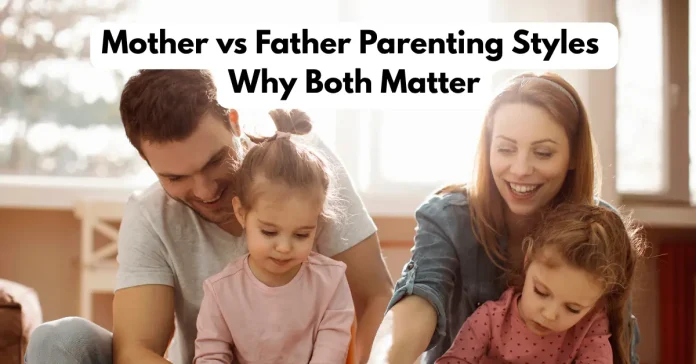

Importance Of Mother vs Father Parenting Styles
Parenting is not about following one perfect formula. Every parent has a different way of caring for, teaching and supporting their child. Mothers and fathers may sometimes have different parenting styles, but these differences can actually help children develop a balanced set of emotional, social and practical skills.
A mother may focus more on emotional connection, daily routines and communication, while a father may encourage independence, problem-solving and taking on new challenges. However, these roles are not fixed. Either parent can provide comfort, discipline, guidance and encouragement.
The most important thing is that children receive love, security, consistency and support from both parents.
Understanding the Differences in Mother and Father Parenting Styles
The roles of mothers and fathers aren’t black and white. Parents’ personality, family background, culture, experiences and beliefs shape parenting styles.
However, it is common for mothers and fathers to have different styles when it comes to their parenting. If parents can see these differences as their strength and not a disagreement, it will help them value each other.
1. Mothers May Focus More on Emotional Support
Mums are very hands-on, especially in the early years. They can take a lot of time to listen to their kids, reassure them when they are upset and encourage them to communicate their emotions.
When children return home from school upset, a mother might take time to ask questions and listen to the child’s thoughts about what took place.
Emotional support like this can enable children to see that their emotions are significant and that they do not need to be afraid to say how they feel.
2. Fathers May Encourage Independence and Exploration
Sometimes, fathers are more likely to be adventurous parents. They can inspire children to experiment, to solve problems on their own or to take risks.
For instance, a father may wish to be supportive by allowing a child to attempt a difficult task and then work it out.
This can support children’s confidence, independence and resilience.
Once again, it’s not just for fathers. Many fathers are also very nurturing, and many mothers are encouraging exploration and independence.
3. Mothers May Pay More Attention to Daily Routines
Mums can be in the thick of their children’s daily activities, so sometimes routines like meals, homework, bedtime, hygiene routines and school preparation may be more important.
Children feel safe when they have consistent routines as they know what to expect during the day.
A set schedule can also teach children responsibility and positive habits.
Dads can also play a role in these routines, not just moms. Having a balanced approach to parenting can be achieved by sharing everyday chores.
4. Fathers Can Use Play as a Learning Opportunity
Fathers can involve children in physical or pretend play. For children, playing, building, sports, or games can stimulate them to explore and engage with their surroundings.
Importance of play: Children learn a lot of skills while playing. They can acquire communication, coordination, creativity, teamwork and problem-solving skills.
Mothers also have a significant involvement in their children’s play and development. It is not about who is playing with the child but whether opportunities are provided for the child to explore and learn.
Why Both Parenting Styles Matter
Children are better when they see varying methods from the adults who are looking after them. One parent can offer emotional support, the other parental encouragement to undertake challenges. These experiences can result in a supportive environment when used together.
Emotional Development
Knowing how to control their feelings and emotions is important for children. Parents can help by listening, talking about feelings and showing children how to respond to difficult situations.
If both parents speak with a slight difference, the children have a choice of two ways to communicate and to express their feelings.
Confidence and Independence
Children require safeguarding and also opportunities to be independent.
Parents can offer a safe environment as they allow for age-appropriate choices. Encouragement from a mother, father, or both may help a child to feel more confident.
Social Skills
Social behaviour is learned from parents. They observe adults and how they interact with each other, how they handle conflicts, and how they cooperate with others.
By exhibiting respectful communication and teamwork skills amongst each other, parents can teach children important social skills that they may carry on to school and throughout their lives.
Problem-Solving Skills
Parents can have different perspectives on problems. One could provide specific feedback and help; the other could suggest letting the child solve the problem for themselves.
Either can be helpful, depending on the scenario.
If homework is a challenge for a child, for instance, one parent could provide an explanation for the concept and the other could pose questions for the child to solve.
What If Mom and Dad Don’t See Eye to Eye on Parenting?
It is normal for parents to behave differently. When disagreements become common, and parents question each other in front of the child, that’s when the problem starts.
Parents do not have to agree on all the nitty-gritty. Rather, they should come up with a few important common rules.
As an example, the parents might agree on:
- Bedtime and regular activities
- Screen-time limits
- Rules regarding respectful behaviour
- School responsibilities
- Appropriate discipline
- Important family values
With these lines drawn by parents, they can keep their own individual personality.
Don’t Criticise Each Other in Front of Children
If there is disagreement among parents, it is best to talk about it privately. This constant remarking of “Your father never understands” or “Your mother is too strict” can confuse children and help them form opinions on who is right and who is wrong.
Rather, parents should model how to deal with disagreements in a respectful and peaceful way.
Parenting Should Be a Team Effort
Parents should be actively involved in their child’s life for modern parenting to be effective. No parent is expected to do everything automatically. Feeding, schoolwork, household duties, play and disciplining, and emotional support should not fall to one parent automatically.
A dad can cuddle a crying toddler, cook meals and assist with homework. The mother can encourage independence, play sports with her child and teach her problem-solving.
It is good for kids when they see both parents participating in different aspects of life in the family.
Dividing up responsibility can also have an anti-stress impact on parents and help to build a greater sense of family.
There Is No “Best” Parent
If parents were to compare themselves to each other and choose the best parent in their opinion, they would be overlooking the point of parenting.
Children need a good mother and a good father. They require parents to be available, affectionate, reliable and open to learning.
Sometimes a mother will have qualities that will mesh with a father’s strengths and complement them, or the father may have qualities that will mesh with a mother’s approach. When parents are respectful and united in a common purpose, these differences can be useful.
Most significantly, parenting styles must not be limited to traditional gender roles. Each family is unique, and both parents can be nurturing, disciplinarians, playmates, educators and housekeepers.
Final Thoughts
Mother vs father parenting styles should not be viewed as a competition. Mothers and fathers may approach parenting differently, but both can make meaningful contributions to a child’s development.
Children need affection as well as boundaries, protection as well as independence, and guidance as well as opportunities to explore. When parents work together and respect each other’s strengths, children can benefit from a wider range of experiences.
The goal is not for mothers and fathers to parent in the same way. Instead, the goal should be to create a loving, safe and supportive environment where children can grow into confident, responsible and emotionally healthy individuals.
Good parenting is ultimately about teamwork, understanding and being there for your child—not about whether the mother or father has the “better” parenting style.