

Breastfeeding is among the most significant aspects of the early life of a baby. For every breastfeeding mother, knowledge about milk storage, proper breastfeeding habits, safe medication, and nutrition is highly important.
One of the most common and simple rules that many mothers use is the 5-3-3 rule for breastfeeding. This comprehensive guide explains its meaning, storage policies, benefits of breastfeeding, positions, common issues such as mastitis, and safety measures.
What is the 5-3-3 Rule for Breastfeeding?
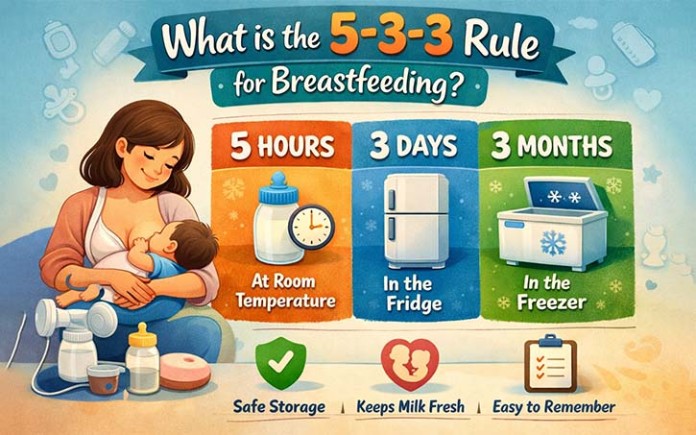
The 5-3-3 rule is a simple breast milk storage guideline:
-
5 hours – Breast milk can stay at room temperature (up to 25°C).
-
3 days – Milk can be stored in the refrigerator.
-
3 months – Milk can be stored in the freezer.
This rule is especially helpful for mothers using a breastfeeding pump or an electric breastfeeding pump machine.
It guarantees safe storage and protects your baby against bacteria.
Why is the 5-3-3 Rule Important?
Following proper storage guidelines:
-
Maintains milk quality
-
Prevents infection
-
Saves milk from waste
-
Helps working moms manage feeding schedules
If you are pumping milk daily, it is important to label every container with the date and time.
Benefits of Breastfeeding
The benefits of breastfeeding are numerous.
Benefits of Breastfeeding for Baby:
-
Strong immunity
-
Better digestion
-
Lower risk of diarrhoea and infections
-
Healthy weight gain
Benefits of Breastfeeding for Mother:
-
Faster recovery after delivery
-
Reduced risk of breast cancer
-
Helps control weight
-
Emotional bonding
That’s why breastfeeding week is celebrated globally to spread awareness.
Best Breastfeeding Positions & Techniques
Using the correct breastfeeding position reduces pain and improves milk flow.
Popular breastfeeding positions include:
-
Cradle hold
-
Cross-cradle hold
-
Football hold
-
Side-lying breastfeeding
Correct breastfeeding techniques help avoid:
-
Nipple pain during breastfeeding
-
Breast pain during breastfeeding
-
Poor latch issues
Using a breastfeeding pillow, a supportive breastfeeding bra, and sometimes a nipple shield for breastfeeding (also called a nipple shield) can improve comfort.
If you experience cracks, apply nipple cream for breastfeeding.
Common Breastfeeding Problems
Nipple Pain
Usually caused by an incorrect latch.
Mastitis
Mastitis is a breast infection that causes swelling, redness, and fever. Early treatment is important.
Low Milk Supply
Frequent feeding and correct positioning help increase milk supply.
17 Foods to Avoid While Breastfeeding
Many moms search for 17 foods to avoid while breastfeeding. While there is no strict ban list, limit:
-
Alcohol
-
Excess caffeine
-
Spicy food
-
Oily junk food
-
High-mercury fish
-
Highly processed foods
Many mothers ask: Can a breastfeeding mother eat pizza?
Yes, occasionally and in moderation.
Another common question: Can a breastfeeding mother drink alcohol?
It is safer to avoid alcohol or wait at least 2–3 hours before feeding.
Medicines During Breastfeeding
Always consult your doctor before taking:
-
Azithromycin in breastfeeding
-
Ibuprofen
-
Dolo 650 during breastfeeding
-
Cough syrup for breastfeeding mothers
-
Zerodol SP
Some medicines are safe, but dosage and timing matter.
When to Stop Breastfeeding?
Many moms ask: When to stop breastfeeding?
Health experts suggest:
-
Exclusive breastfeeding for 6 months
-
Continue up to 2 years or more
If you are planning how to stop breastfeeding or how to wean off breastfeeding, reduce feeds gradually to avoid pain and emotional stress.
Indian Breastfeeding Awareness
The practice of Indian breastfeeding strongly supports natural feeding. Awareness about proper breastfeeding methods is increasing steadily.
Breastfeeding vlogs or viral videos on social media raise awareness, but mothers should not rely only on any breastfeeding viral video found online.
Even when discussed by public personalities such as Ashley James, it helps normalize breastfeeding conversations globally.
Final Words
The 5-3-3 rule for breastfeeding is a simple and practical storage guide:
-
5 hours at room temperature
-
3 days in the fridge
-
3 months in the freezer
Combined with correct breastfeeding techniques, a healthy diet, and safe medicine use, it ensures a safe and comfortable breastfeeding journey for both mother and baby. You can also check out How Long Should Mother Do Breastfeeding.
Breastfeeding is not just feeding — it is nutrition, protection, and love.